A buyer walks into a sales center in West Cary expecting something close to what a real estate site told them the town's homes go for. Instead they're handed a spec sheet that starts at $900,000, on a half-acre lot, before a single upgrade. Confused, they drive back toward downtown and tour a new condo building near Fenton where a unit lists for $360,000. Same town. Same year. Two builders. Neither price looks like the number they came in with.
That whiplash isn't a fluke of timing. It's the shape of Cary's new-construction market right now, and it explains a statistic that would otherwise look like a typo.
The Premium That Doesn't Add Up
In the first quarter of 2026, Realtor.com and the National Association of Realtors tracked new-construction and existing-home prices across major metros. Nationally, new homes carried a 15.1 percent premium over resale. In typical suburban ZIP codes, that gap narrowed to just 7 percent, because builders there are still putting up the same kind of single-family product that resale sellers are competing with.
Raleigh-Cary didn't follow either pattern. New-construction homes in the metro had a median price of $1,053,423 against $489,000 for existing homes, a premium of 115.4 percent, among the widest of any metro in the country.
| Market segment | New-construction median | Existing-home median | Premium |
|---|---|---|---|
| National | $449,373 | $390,550 | 15.1% |
| Typical suburban ZIP | $427,900 | $399,900 | 7.0% |
| Raleigh-Cary | $1,053,423 | $489,000 | 115.4% |
That number tempts a simple explanation: builders in Cary are gouging buyers, or new construction here is simply a luxury product. Neither holds up once you look at what's actually being built and where.
What Happened to Cary's Middle
Cary's median resale price sat in the $625,000 to $645,000 range through the summer of 2026, with homes moving at a median of 51 days on the market in August. But that median hides real range, and almost all of that range sits in resale.
Preston and Amberly, in north and central Cary, run from roughly $700,000 to $1.1 million, with limited turnover because families tend to stay ten years or longer. MacGregor Downs and south Cary run from about $450,000 to $800,000, with more frequent multiple-offer situations. Carpenter Village, on the more affordable end, spans roughly $350,000 to $600,000. These are established neighborhoods, built out years ago, with the kind of variety a median price can't show on its own.
New construction doesn't fill in that same middle. It skips it.
Why New Construction Skipped the Middle
Cary is a mature market with limited remaining land for large-scale residential development, unlike Apex, Holly Springs, or Wake Forest, where builders can still assemble the acreage for broad subdivisions of single-family homes. In Apex, new construction is still dominated by detached houses in newer master-planned communities. In Cary, the land that's left pushes new construction toward two very different products.
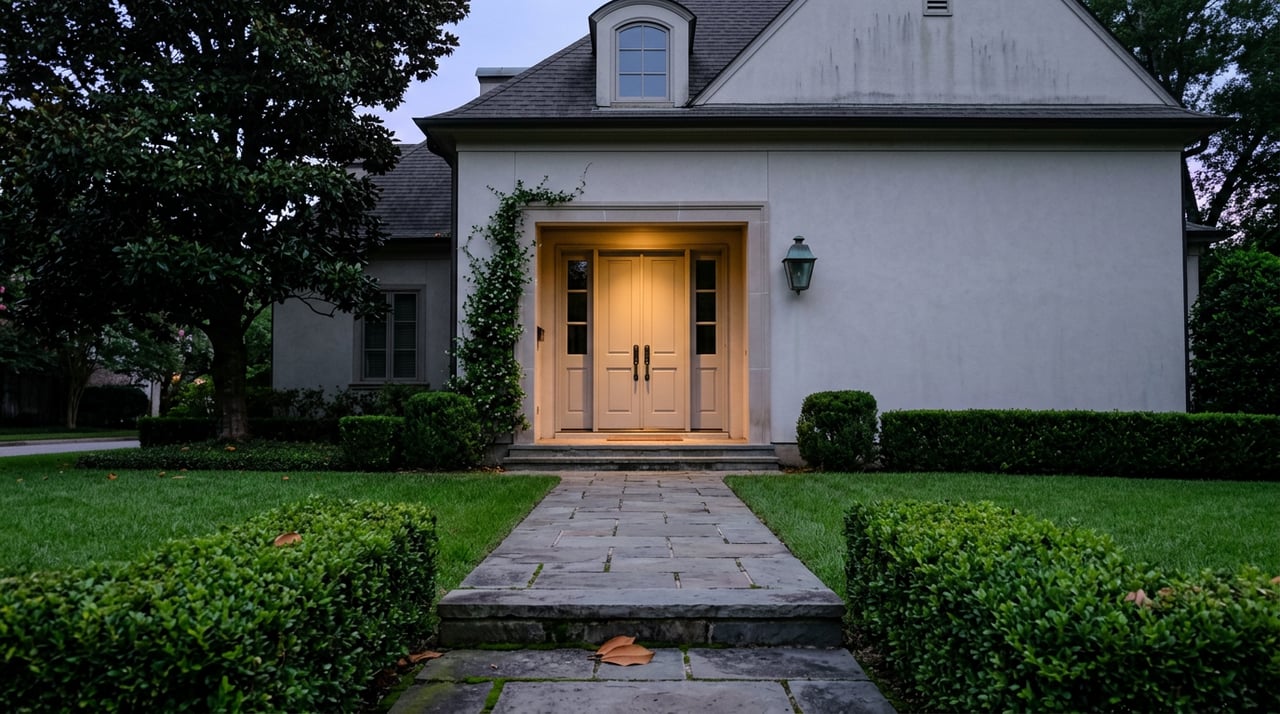
At one extreme, in far West Cary, builders are working with the acreage that remains, and it isn't cheap. Montvale, a community of 109 homesites near Morrisville Parkway and I-540, sits on roughly half-acre lots with custom homes starting at $900,000, built by names like Wagoner Homes, ICG Homes, Poythress Construction, and Hurst Home Company. Lots that size back up to wooded buffers and connect to the American Tobacco Trail, which is part of what buyers are paying for. It isn't a bigger version of a $650,000 house. It's a different category of lot.
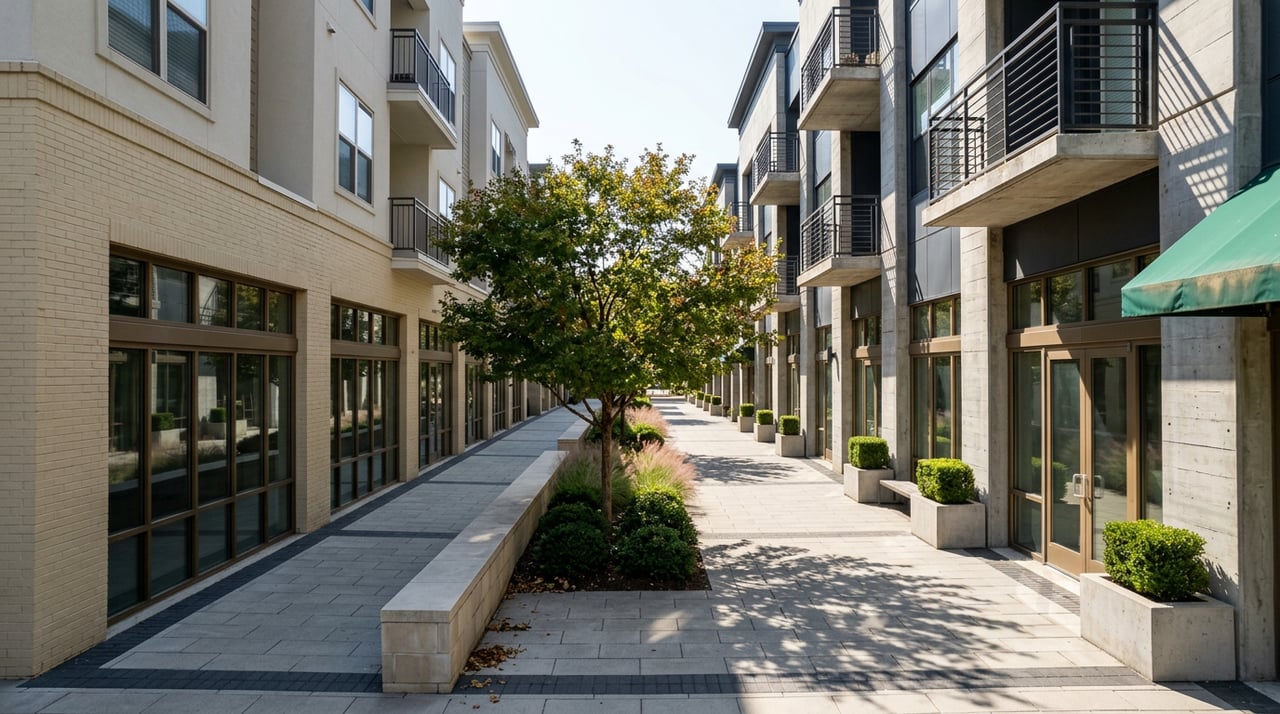
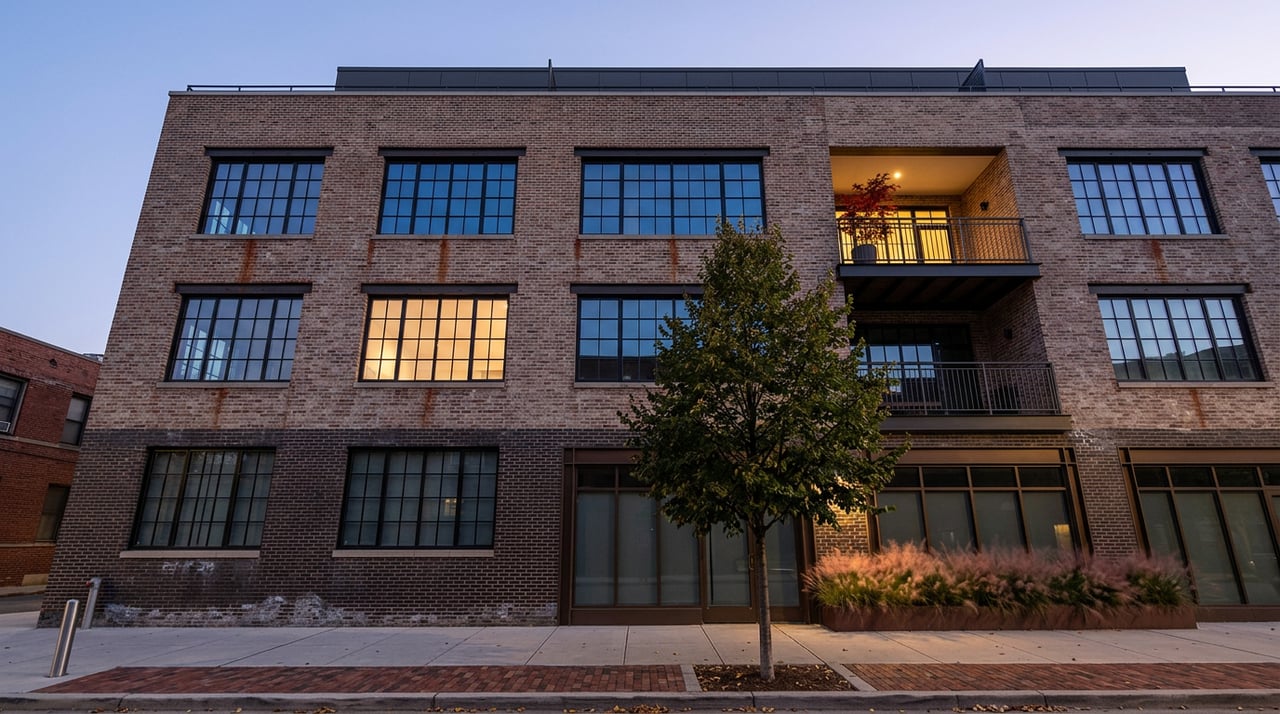
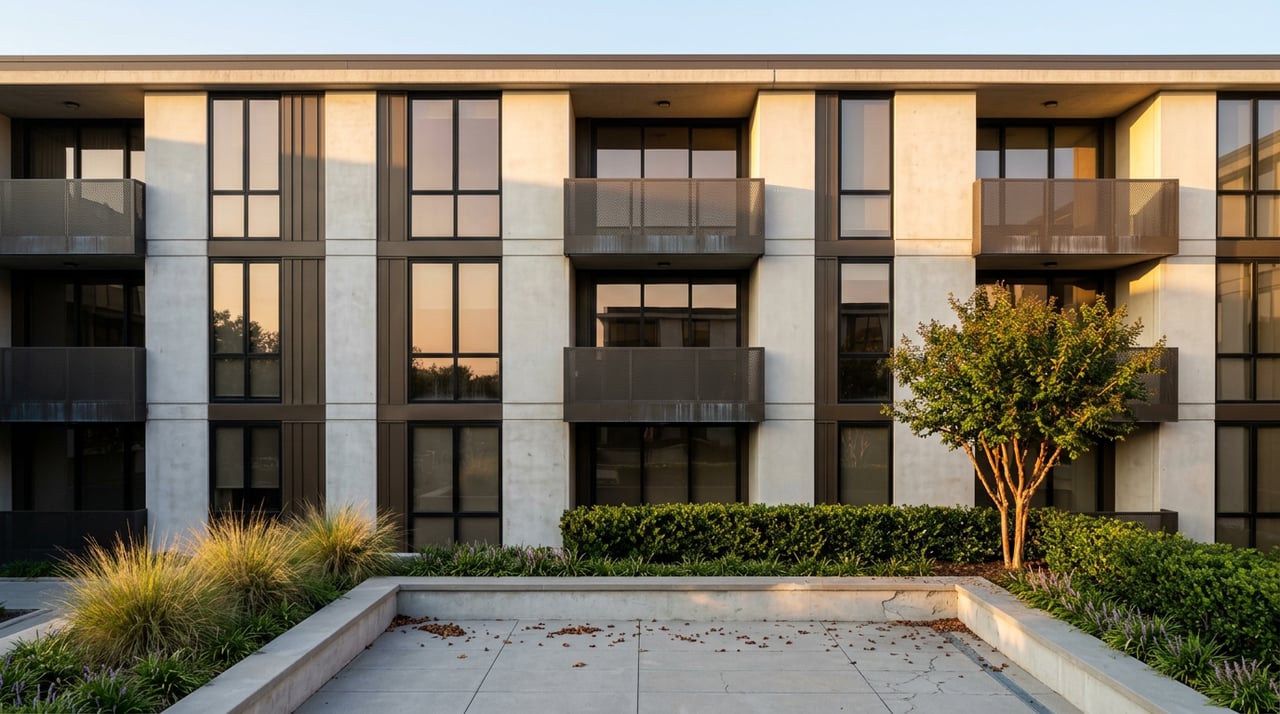
At the other extreme, near Fenton, Cary's 92-acre mixed-use district built by Hines and Columbia Development along Cary Towne Boulevard, new construction means condos and townhomes rather than detached homes. In August 2026, a condo in the Tessa building near Fenton listed at $360,000, well under Cary's overall median, but also well under the square footage most resale buyers expect at that price. Fenton's approved plan includes up to 920 dwelling units alongside its office and retail space, and that residential mix leans toward attached product almost entirely.
Cary's new-construction premium isn't a story about better homes. It's a story about which homes are even allowed to get built anymore.
Between those two extremes sits almost nothing new. The $500,000 to $650,000 detached single-family home, the kind a growing family expects to find as "new construction" in a Triangle suburb, mostly doesn't exist as new inventory in Cary. It exists as resale, in neighborhoods like MacGregor Downs and Carpenter Village that were built when land was still available at that scale.
The Builders Are Already Bidding Against Themselves
Here's where the timing actually favors buyers, if they know where to look. Builders across the Triangle had already cut prices on 31 percent of their active listings by spring 2026, averaging 7 percent off original list, reacting to buyer resistance in real time. Resale sellers, by contrast, tend to hold their number and adjust only after weeks of no showings.
That gap matters because of how new-construction pricing actually behaves over time. New homes in this market are typically priced 10 to 20 percent above comparable resale at the time they're built, with that gap closing as the surrounding resale market catches up over three to five years. A buyer comparing a builder's sticker price to a nearby resale comp today is comparing an opening bid to a settled number. The builder's incentive sheet, not the list price, is where that gap gets negotiated down in the near term.
Practically, that means the Montvale buyer and the Fenton buyer are playing different games. In West Cary, where land is the scarce input, incentives tend to show up as design center credits or rate buydowns rather than price cuts, because the builder isn't worried about competing lots. Near Fenton, where the competition is unit against unit within the same building, price movement and closing-cost credits are more likely to be on the table.
Matching the Segment to the Search
Once you separate Cary's new construction into what it actually is, the search gets easier.
- A buyer set on new construction with acreage, privacy, and trail access should expect West Cary pricing near or above $900,000, and should negotiate on design center dollars and financing terms rather than base price.
- A buyer who wants new construction with low maintenance and walkability to Fenton's retail and restaurants should expect a condo or townhome footprint, not a detached house, at price points that can undercut Cary's overall median.
- A buyer whose budget sits between $400,000 and $700,000 for a detached single-family home is very likely shopping resale, in neighborhoods like Carpenter Village or MacGregor Downs, whether or not "new construction" was the original plan.
None of these is a worse choice. They're different products wearing the same town name.
A Few Questions Worth Asking
Does new construction in Cary always cost more per square foot than resale? Not evenly. The premium is driven by product mix as much as by finishes. A West Cary custom home on a half-acre lot and a Fenton-area condo both count as "new construction," but they sit at opposite ends of the price range, which is why the metro-wide premium looks so extreme when averaged together.
Will the gap between new and resale close? Historically, new-construction pricing in this market has converged with resale values over three to five years as neighborhoods mature. That pattern doesn't erase the upfront premium, it just means the premium is partly a timing cost, not a permanent one.
Is it worth waiting for prices to drop further? Builders have already been cutting into their own margins faster than resale sellers, averaging 7 percent off list on nearly a third of active listings as of spring 2026. Waiting for a materially better number may mean waiting past incentives that are already on the table today.
Cary's premium isn't a warning sign. It's a map, if you know how to read it. Understanding which segment you're actually shopping, luxury land, dense infill, or established resale, is the difference between comparing apples to oranges and knowing exactly which orchard you're standing in.
If you're trying to figure out which of these three Carys fits your search, Hodge & Kittrell Sotheby's International Realty knows the builders, the incentive structures, and the resale comps well enough to tell you before you sign anything. Request Your Instant Home Valuation to see where your current home or your target budget actually lands in today's market.