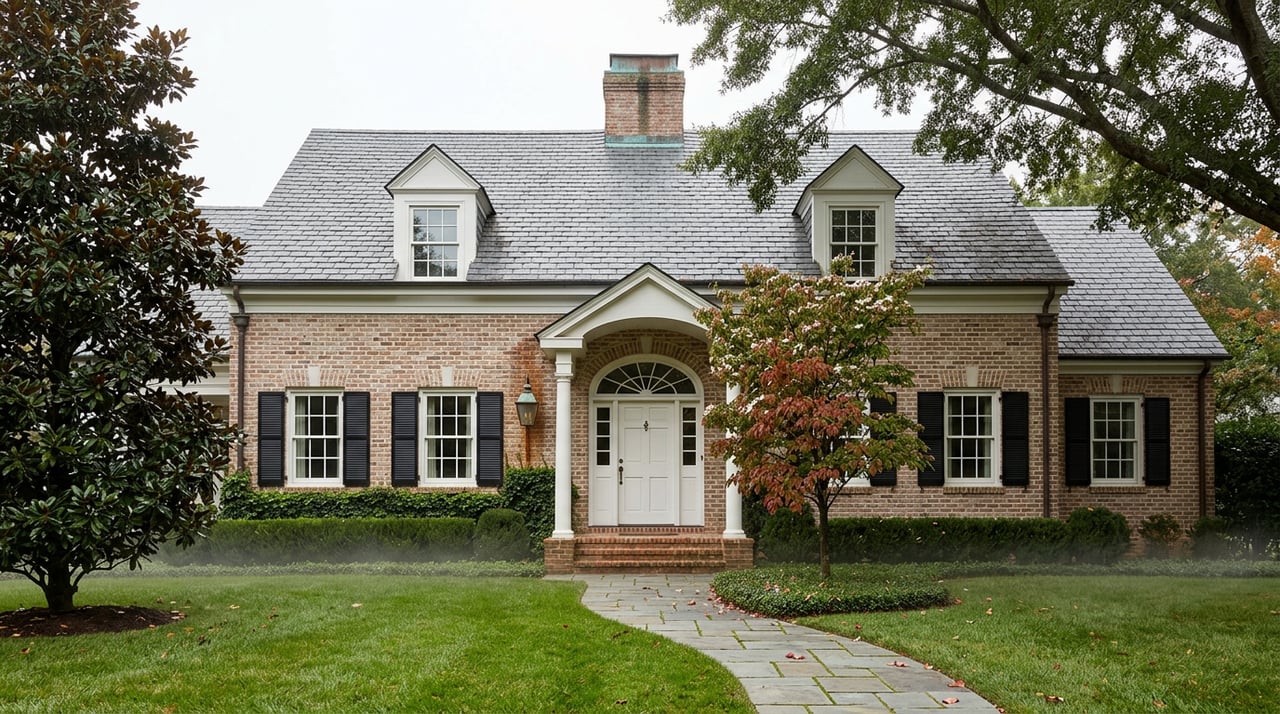
A buyer under contract on a 1925 bungalow near Historic Oakwood watched her inspector circle the side yard twice before crouching near two rusted pipe stubs poking out of the pine straw, six inches apart, half-swallowed by a boxwood. Neither pipe connected to anything visible. The listing agent had never noticed them. The seller, who had owned the house for eleven years, had no idea what they were for. The disclosure statement she'd signed said, truthfully, that she had no knowledge of an underground storage tank on the property.
That's the part first-time buyers of Raleigh's historic homes tend to miss. The disclosure form isn't a guarantee. It's a record of what the seller happens to know, and in a neighborhood built before natural gas lines reached most of the city, what the seller knows is often nothing at all.
The Math Nobody Puts on the Form
Heating oil was the default fuel across the Triangle for most of the twentieth century, before natural gas infrastructure and electric heat pumps became standard. Chris Boshoff, president of the Triangle environmental firm Cohesion Environmental Services, has put a number on it: more than half of homes in the Triangle once had heating oil, and the state estimates somewhere between 200,000 and 500,000 residential oil tanks are still buried across North Carolina, compared to fewer than 50,000 regulated gasoline tanks at commercial sites. That comparison matters. The tank in your neighbor's yard almost certainly isn't a rare find. It's the ordinary infrastructure of a home built before the mid-1960s.
Raleigh's inner-ring historic districts sit squarely inside that window. Historic Oakwood's building boom ran from the 1870s through the early twentieth century, making it Raleigh's oldest intact residential neighborhood. Cameron Park, sometimes still called Forest Park by longtime residents, filled in between the 1910s and 1930s. Hayes Barton followed in the 1920s, developed by landscape architect Earle Sumner Draper and built out largely by contractor Howard E. Satterfield, a former mechanical engineering professor at what's now NC State who left academia for homebuilding and favored Colonial and Georgian Revival designs. Boylan Heights, one of Raleigh's first planned suburbs, developed in the same early-twentieth-century wave.
Every one of those neighborhoods was fully built out before oil heat gave way to gas and electric systems in most North Carolina homes. A house that age didn't skip the tank. It just may have covered it up, forgotten it, or converted to gas decades ago and left the old tank exactly where the original owner buried it.
What North Carolina Actually Requires, and What It Doesn't
Here's the part that surprises buyers who assume disclosure laws work like an inspection. North Carolina's Residential Property Disclosure Act, under G.S. 47E-4, requires sellers to disclose their actual knowledge of an underground storage tank as one of the listed environmental conditions. The North Carolina Real Estate Commission goes further and treats the presence of a tank as a material fact that a listing agent must disclose if the agent knows about it, or should have discovered it through reasonable diligence, whether or not the seller ever says a word about it.
That sounds protective, and it is, as far as it goes. But the obligation only attaches to what someone already knows. The seller in Oakwood who genuinely has no idea her yard once fueled an oil furnace hasn't lied on her disclosure form. She's told the truth, and the truth just isn't the whole picture.
The regulatory gap goes deeper. North Carolina treats residential heating oil tanks differently from the underground tanks at a gas station. Mecklenburg County Health Department says residential heating oil tanks are exempt from leak detection, corrosion protection, and spill prevention requirements.
That exemption is what turns "the disclosure form said nothing" into a genuine risk rather than a formality. A tank can sit under a side yard for sixty years, never mentioned in any transaction, simply because no transaction ever triggered a reason to look.
When Something Does Turn Up
If a sweep or an inspection does find a tank, the path forward depends entirely on whether it leaked. Cedar Rock Environmental says a property with confirmed soil or groundwater contamination from petroleum requires a Notice of Residual Petroleum to be filed with the county Register of Deeds before the property can change hands. Most lenders and buyers want a Notice of No Further Action from the state before they'll close. Hutchens Law Firm says North Carolina has required homeowners to report signs of a leak to the Department of Environmental Quality within 24 hours of discovering them since 2015. The state first classifies the risk, and a low-risk finding can often be closed out with the residual petroleum notice rather than a full excavation.
If the tank turns out to be empty and was properly abandoned in place, filled with sand rather than simply left hollow underground, the transaction usually moves forward without much drama. The complications show up when nobody can produce paperwork proving the tank was ever closed correctly, which is common for work done decades ago, long before anyone thought to keep a permit for it.
Firms like Cedar Rock Environmental and Raleigh-based Oil Enviro handle exactly this kind of work across the Triangle: locating tanks with metal detectors and probing rods, testing soil where warranted, and filing the paperwork a lender will actually accept. None of that changes the earlier point. Those services exist because the tank has to be found first.
A Few Questions Worth Asking Before You Write the Offer
- Does the house predate the mid-1960s, and if so, was it ever heated by oil before converting to gas or electric?
- Has the seller lived in the home long enough to know its full heating history, or did they inherit a disclosure form filled out based on secondhand information?
- Are there unused pipe stubs, capped fuel lines in a crawl space, or old vent caps anywhere on the exterior?
- Would the seller agree to a tank sweep as a condition of the offer, separate from the general home inspection, which typically does not cover underground or concealed systems?
- If a tank is found and empty, is there documentation that it was abandoned in place with sand fill rather than simply left in the ground?
None of these questions require a lawyer to ask. They require someone who knows that in a neighborhood like Hayes Barton or Boylan Heights, the absence of a mention on the disclosure form is not the same as the absence of a tank.
FAQ
Does a standard home inspection check for underground oil tanks? No. Most general home inspections are visual and limited to accessible systems. A buried tank with no visible pipe or fill cap typically falls outside that scope, which is why a separate tank sweep is worth requesting on any pre-1960s property.
If the seller says "no representation" on the disclosure form, does that end the conversation? Not necessarily. NC REALTORS says checking "no representation" limits the seller's own disclosure duty, but it doesn't override an agent's separate obligation to disclose known material facts, including a tank the agent is aware of through other means.
Is finding a tank always a deal-breaker? No. An empty tank with documented, proper abandonment is a common and manageable finding. The issues that complicate a closing involve confirmed leaks or a total lack of paperwork showing what was actually done when the property switched heating systems.
Buying or selling a home in one of Raleigh's historic districts means buying or selling a piece of the city's actual building history, oil tanks and all. If you're weighing a purchase in Historic Oakwood, Hayes Barton, Cameron Park, or Boylan Heights and want a clear-eyed read on what a specific property's age and heating history might mean for your offer, the team at Hodge & Kittrell Sotheby's International Realty can walk the property with you before you write it. Request Your Instant Home Valuation to start the conversation.
This article is general information, not legal, tax or financial advice. Consult a qualified professional about your situation.