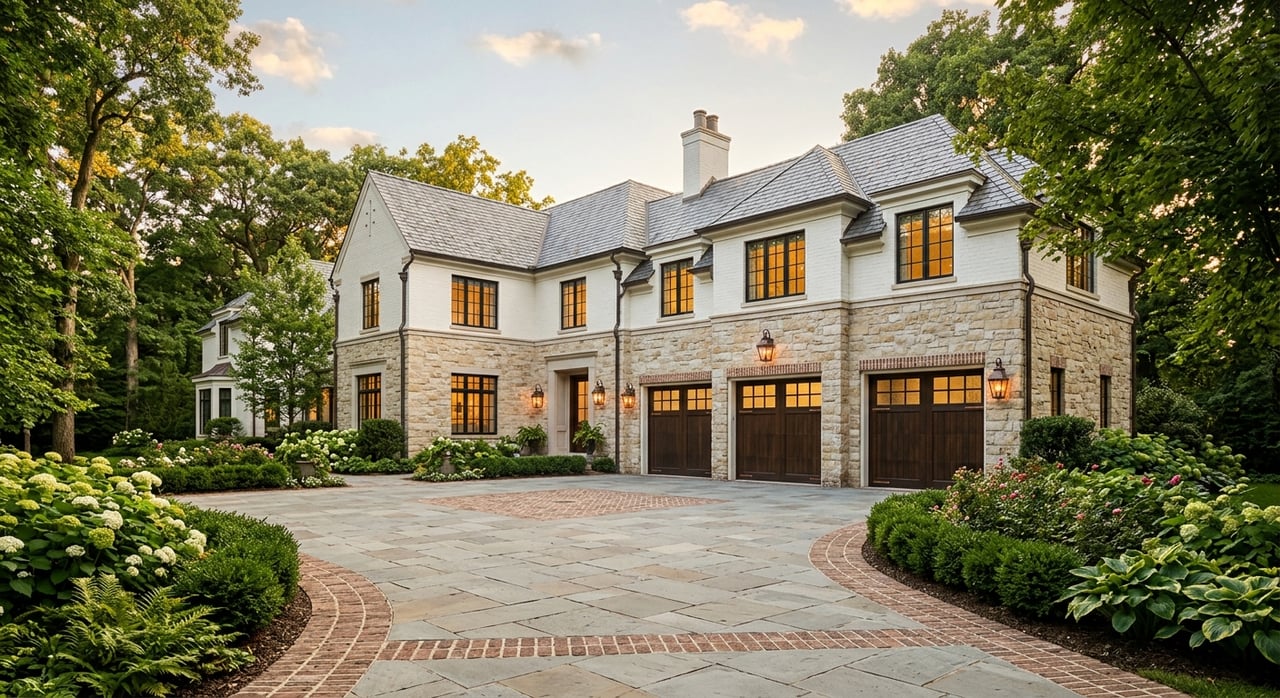
If you are considering a luxury home in Chapel Hill, you are not just buying square footage. You are choosing a setting, a pace of life, and a daily routine shaped by green space, regional connectivity, and one of the Triangle’s most distinctive housing markets. The good news is that Chapel Hill offers a wide range of luxury options, and understanding how this market works can help you buy with more confidence. Let’s dive in.
Why Chapel Hill Luxury Feels Different
Chapel Hill has long drawn interest for reasons that go beyond architecture alone. The town points to its mix of historic homes, parks, greenways, and its role as a center for innovation, research, and lifelong learning. That broader foundation matters because luxury demand here is influenced by the presence of UNC, UNC Hospitals, and the wider research economy connected to the Triangle.
For you as a buyer, that means value is often tied to both lifestyle and practicality. A beautiful home may also be prized for easier access to campus, medical facilities, Research Triangle Park, or Raleigh-Durham International Airport. In Chapel Hill, luxury is often as much about location and land as it is about finishes.
What the Current Market Suggests
Recent market snapshots show a Chapel Hill market that is competitive, but not in full frenzy mode. Realtor.com reported Orange County as a balanced market in March 2026, with Chapel Hill showing a median listing price of $675,000, 406 homes for sale, a 33-day median on market, and a 100% sale-to-list ratio. Zillow’s Chapel Hill figures also point in a similar direction, with an average home value of $631,167, 296 homes for sale, 21 days to pending, and a 0.982 median sale-to-list ratio.
Those numbers are not direct apples-to-apples comparisons because each platform uses different methods. Still, together they suggest a market where strong homes can move quickly, while buyers may still have room to be thoughtful and strategic. In the luxury segment, that balance often depends heavily on the specific neighborhood, lot, and property condition.
How Chapel Hill Defines Luxury
One of the first things to understand is that Chapel Hill does not have a single luxury price cutoff. The market includes everything from in-town condos and smaller-lot homes to large estates, homes above 6,000 square feet, and acreage tracts of more than 40, 60, and even 89 acres. That range shows how broad the luxury category can be here.
In practical terms, luxury in Chapel Hill is often defined by a combination of factors:
- Neighborhood or community setting
- Lot size and privacy
- Architectural character
- Access to amenities or club lifestyle
- Walkability or commute convenience
- Land use potential and long-term flexibility
This is why two homes at similar price points can offer very different value. One may deliver a walkable village setting with services nearby, while another may offer acreage, seclusion, and room for a more estate-style lifestyle.
Why Micro-Markets Matter
In Chapel Hill, neighborhood-level decisions usually matter more than citywide averages. Realtor.com zip-code data shows higher median listing prices in some of the town’s more affluent ZIP codes, including about $725,000 in 27517, $649,000 in 27514, and $639,500 in 27516. Zillow’s neighborhood values also place Southern Village around $788,640.
That does not mean one area is automatically better than another. It means your decision should match the kind of luxury experience you want. In Chapel Hill, the right fit often comes down to tradeoffs such as privacy versus convenience, mature setting versus newer planning, and club amenities versus walkable mixed-use design.
Common Luxury Lifestyles in Chapel Hill
Meadowmont: Planned and Amenity-Rich
Meadowmont offers one of the clearest examples of a polished, planned luxury environment. Its official materials describe a 435-acre mixed-use community with row houses, traditional homes, cottage homes, condos, apartments, and a retirement community. The community also highlights trails, parks, ponds, Meadowmont Village, and the UNC Wellness Center.
For buyers, Meadowmont can appeal if you want an organized, amenity-rich setting with nearby services and a more connected daily routine. It is also important to know that exterior changes require review through Meadowmont’s MARC guidelines. If you are considering renovations, design changes, or exterior additions, that review process should be part of your planning from the start.
Southern Village: Walkable and Connected
Southern Village represents a different kind of luxury. According to the Urban Land Institute, it is a 312-acre mixed-use development about two miles south of downtown Chapel Hill and a little more than a mile south of UNC. It was designed around a village green, open space, trails, connected streets, and a mix of residential forms and architectural styles.
If your version of luxury includes walkability, neighborhood gathering spaces, and transit access, Southern Village may stand out. The area also includes a 400-space park-and-ride lot and public transit connections, which helps explain its continued appeal for buyers who value convenience as much as home design.
Governors Club: Private and Estate-Oriented
Governors Club is one of the strongest examples of Chapel Hill’s gated, golf-club style luxury market. Community documents describe it as a gated community on and around Edwards Mountain with 1,209 properties ranging from 0.05 to 3.5 acres. Estate lots range from 0.5 to 4.0 acres, and some neighborhoods feature distinctive architectural styles.
For you, the draw may be privacy, larger homesites, and a more secluded club-centered setting. It is equally important to understand the ownership structure. The POA manages roads, gates, sidewalks, stormwater, and other shared assets, and homeowners pay assessments, with some neighborhoods also carrying additional sub-association fees.
Chapel Hill Country Club and The Oaks
If you prefer an older, more established in-town luxury pocket, Chapel Hill Country Club offers another frame of reference. The club notes that it has been the only private country club in historic Chapel Hill since 1922 and is nestled in The Oaks neighborhood. This can appeal to buyers who want a classic club setting in a more established part of town rather than a newer master-planned environment.
Why Commute and Access Matter
In many markets, commute is a secondary factor once a buyer reaches the luxury tier. In Chapel Hill, it often remains central to the decision. Visit Chapel Hill highlights proximity to UNC, UNC Hospitals, Research Triangle Park, free public transportation, and abundant green space as core features of the area.
That matters because many buyers in the luxury segment are balancing lifestyle with demanding schedules. UNC Medical Center’s main campus is at 101 Manning Drive in Chapel Hill, and many professionals also value access to RTP and RDU. A home that saves time on a weekly basis may hold strong appeal even when another property offers more square footage.
Key Tradeoffs to Weigh
Luxury buyers in Chapel Hill are often choosing among a few recurring tradeoffs. Clarifying your priorities early can save time and keep your search focused.
Walkability Versus Acreage
A walkable setting like Southern Village or Meadowmont can offer convenience, trails, shops, and easier daily routines. An acreage property or a larger homesite may offer privacy and flexibility, but often with a different relationship to errands, commuting, and maintenance.
Historic Character Versus Newer Design
Some Chapel Hill buyers want established homes in mature settings with traditional character. Others prefer newer construction, lower-maintenance materials, and more current floor plans. Neither path is universally better, but each comes with a different ownership experience.
Club Amenities Versus Fewer Restrictions
A gated or amenity-driven community can offer a strong lifestyle package and a more consistent physical environment. At the same time, those settings often come with assessments, architectural review, and additional governance. If you expect to make major changes after closing, that structure deserves careful review.
Due Diligence Matters Even More at the High End
North Carolina’s due diligence process is especially important when you are buying a luxury property. The North Carolina Real Estate Commission explains that the due diligence fee is negotiated, paid to the seller at contract acceptance, and generally non-refundable if you terminate during the due diligence period. That period is typically where you complete investigations involving the home, pest issues, septic, survey, appraisal, title, and financing.
For luxury properties, due diligence often needs a wider lens. Features such as acreage, private roads, gated access, outbuildings, extensive landscaping, or older custom construction can create more moving parts. A careful review can help you understand both immediate condition and long-term ownership responsibilities.
Review Restrictions Before You Close
Chapel Hill luxury homes sometimes come with extra layers of review that can affect your future plans. The town states that owners in local historic districts need a Certificate of Appropriateness for exterior changes. Meadowmont requires MARC approval for exterior changes, and Governors Club has POA and neighborhood rules tied to shared infrastructure and architectural review.
If you are already thinking about a pool, terrace, fence, detached structure, major landscaping, or home addition, check those standards before you buy. You will want clarity on covenants, easements, overlay districts, and approval timelines so your post-closing plans match what the property actually allows.
Think Beyond the Purchase Price
Long-term ownership costs deserve attention in the Chapel Hill luxury market. Orange County’s 2025 revaluation was driven by significant property-value growth, and county guidance notes that North Carolina law requires property to be assessed at 100% of market value as of the revaluation date.
That means future tax assessments are part of the ownership picture. It is wise to think about how a property’s location, maintenance needs, community governance, and resale appeal may affect value over time. In the luxury tier, stewardship matters just as much as acquisition.
A Smart Buying Approach
If you are preparing to buy in Chapel Hill’s luxury market, keep your process grounded in the factors that shape value here most clearly:
- Define your preferred lifestyle first, not just your price range
- Compare neighborhoods as distinct micro-markets
- Weigh commute patterns alongside design and lot size
- Review HOA, POA, and architectural requirements early
- Use due diligence to examine both condition and long-term constraints
- Consider tax reassessment and ownership costs as part of the investment
A well-chosen Chapel Hill luxury home can support your lifestyle in very different ways, whether you want walkability, a club environment, historic character, or more land and privacy. The key is matching the home to how you actually want to live.
When you are ready to explore Chapel Hill with a more tailored strategy, Hodge & Kittrell Sotheby’s International Realty offers the local perspective, discreet guidance, and relationship-first service that luxury buyers value.
FAQs
What counts as a luxury home in Chapel Hill?
- In Chapel Hill, luxury does not follow one fixed price point. It is often defined by neighborhood, lot size, privacy, architecture, amenities, and setting, with active inventory ranging from condos to large estates and acreage properties.
Is the Chapel Hill luxury market still competitive for buyers?
- Yes, but it is not purely frenzied based on current broader market indicators. Chapel Hill appears competitive and selective, with well-positioned homes still drawing attention.
Do HOA and POA rules matter when buying a luxury home in Chapel Hill?
- Yes. In communities such as Meadowmont and Governors Club, buyers should review assessments, architectural rules, and community governance because they can affect both costs and future property changes.
Why is location so important for Chapel Hill luxury buyers?
- Location matters because many buyers value access to UNC, UNC Hospitals, RTP, RDU, green space, and daily conveniences alongside the home itself. In Chapel Hill, commute and lifestyle often shape value together.
What should buyers know about due diligence in North Carolina luxury purchases?
- North Carolina’s due diligence period is the main window for investigating the home, land, title, financing, and other key issues. The due diligence fee is negotiated and is generally non-refundable if you terminate during that period.
Can renovation plans affect which Chapel Hill luxury home you should buy?
- Yes. Historic district rules, HOA guidelines, POA requirements, and architectural review standards may limit or shape exterior changes, so buyers should confirm those details before closing.